
Your Dog Limps at Home but Walks Fine at the Vet. Here’s Why.
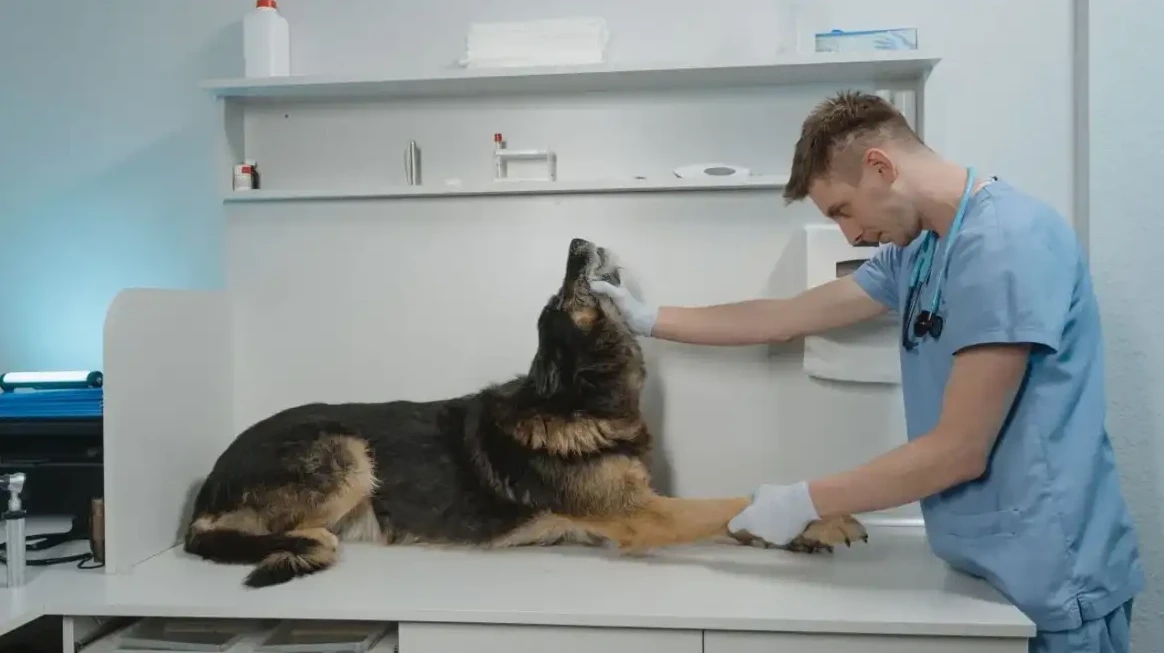
It’s a strange, slightly unsettling moment a lot of Santa Rosa pet owners have had: your dog’s been favoring a back leg all week after a long weekend at Howarth Park or a trail loop around Spring Lake, you finally get them into Lakeside Pet Hospital on Montgomery Drive to have it checked out, and the second the vet asks them to walk across the room, they trot across like nothing’s wrong. You start to wonder if you imagined the whole thing.
You didn’t. What you’re seeing has an actual name and a real physiological cause, and it’s worth understanding if you’ve ever left a Santa Rosa vet appointment more confused than when you walked in.
It’s Not in Your Head: It’s Adrenaline
The moment a dog or cat walks into a clinic, their body treats it like a real, if mild, threat: unfamiliar smells, strange surfaces, a stranger’s hands. That triggers a stress response, and one of the first things that response does is release adrenaline into the bloodstream.
Adrenaline doesn’t just make a heart race. It raises the body’s pain threshold and pushes an animal toward action over discomfort, which is useful if you’re a smaller animal trying not to look vulnerable in front of something unfamiliar. The practical result, documented by Cornell University’s College of Veterinary Medicine, is that dogs often move normally once they arrive at the clinic due to excitement or adrenaline. The limp you watched all week at home can genuinely disappear for the ten minutes your dog is on the exam room floor.
This isn’t unique to dogs, and it isn’t a fluke. It’s the same basic mechanism behind “white coat syndrome” in people, where your own blood pressure reads higher at the doctor’s office than at home. In pets it shows up as a flattened gait, a steadier walk, or a dog who won’t flinch when a sore spot is touched, simply because the adrenaline hasn’t worn off yet.
Why this makes pain genuinely hard to catch in a single visit
This is part of why veterinary pain researchers don’t trust a single clinic visit to rule pain in or out. A short assessment, even a thorough one, can miss subtle or intermittent pain symptoms precisely because the clinic setting is the worst possible environment to observe a pet’s natural movement.
Chronic pain in particular tends to show up in specific, everyday contexts that look a lot like Sonoma County life: the steep driveway up to the house in the Bennett Valley hills, the stairs at a Montgomery Village apartment, the second mile of a trail loop around Spring Lake, or just hesitating before jumping into the car for the school run. Those are the moments that reveal a limp, not a five-minute trot across exam room tile.
None of this means your vet can’t help. It means the few minutes inside the building are only part of the picture, and what you describe from home often carries more diagnostic weight than what your pet happens to demonstrate that day. (If the limp is sudden, severe, or paired with other symptoms like collapse or labored breathing, that’s a different situation: see our guide on signs your pet needs immediate veterinary attention rather than waiting for a routine appointment.)
What this means for you, practically
If you’ve ever felt like you needed to “prove” your pet was limping by re-staging it in the parking lot, you’re not alone, and there’s a better way to handle it.
Video beats memory. A 15-second clip of the actual limp, taken at home in a calm moment, tells your vet more than a verbal description ever will, and far more than what your pet does once adrenaline kicks in.
Describe the pattern, not just the moment. “Worse after long walks,” “struggles to get up after lying down,” “skips the third stair” are the kind of details that matter precisely because they won’t reproduce themselves on command in an exam room.
Don’t second-guess yourself if the limp vanishes at the clinic. This is one of the most common and well-understood quirks of veterinary exams, not a sign you misread your own pet.
Mention pain medication trials if mobility concerns persist. Sometimes the clearest evidence comes from how a pet moves once on a short course of pain relief, since improvement on medication can confirm pain was present even when the exam itself looked normal.
If your pet is getting older, build this into a regular wellness visit. Mobility changes are exactly the kind of thing a senior pet wellness exam is built to track over time, rather than something to puzzle over alone between appointments.
It works in the other direction too
It’s worth knowing the same mechanism can occasionally hide more than mobility problems. A dog or cat under acute stress may also show an elevated heart rate, faster breathing, or even abnormal bloodwork patterns that have nothing to do with illness and everything to do with the visit itself, which is one reason your vet may ask to recheck a borderline result on a calmer day rather than treating a single stressed reading as the full picture.
If you’re dealing with this right now
If your pet seems to “perform fine” at appointments despite something looking off at home, you’re not imagining it, and you’re not alone in finding it frustrating. It’s one of the most common things Santa Rosa pet owners bring up at Lakeside Pet Hospital, right here on Montgomery Drive.
Bring it up directly, say plainly that the behavior is intermittent or only shows up outside the clinic, and bring video if you can. Call us at (707) 539-3393 or book a visit with our team if you want to talk through what you’re seeing before your next appointment; sometimes the right next step is a recheck on a calmer day, sometimes it’s diagnostics that don’t depend on catching the behavior live.
If your pet also tends to get anxious before appointments, a lot of dogs do, especially after a stressful car ride in from Rincon Valley, Oakmont, or out toward Bennett Valley. It’s worth pairing this with our guide on calming an anxious pet before a vet visit. A calmer pet at the door means a more reliable exam once they’re inside.
Frequently Asked Questions
Is my vet missing something if my dog “performs fine” at the appointment?
Not necessarily. This is a well-recognized limitation of clinic exams, not a sign of a missed diagnosis. It’s exactly why what you observe at home matters as much as what happens during the visit itself.
Should I try to make my dog limp on purpose to “prove it” at the vet?
No need. A calm description of the pattern, or better yet a short video from home, is more useful than trying to recreate the limp under pressure.
Does this mean clinic exams are unreliable?
Not unreliable, just incomplete on their own for intermittent or stress-masked pain. Your vet may combine the exam with your at-home observations, imaging, or even a short medication trial to get the full picture.
Could this happen with cats too?
Yes. Cats show the same stress-driven masking, often combined with their instinct to go still and withdrawn rather than active, which can look like “fine” to an unfamiliar eye even when something is genuinely wrong.
Is this something a Santa Rosa vet sees often, or is my dog unusual?
Very common. Between the hills, the trails at Spring Lake, and how active most local dogs are, mobility concerns come up constantly at our Montgomery Drive clinic, and the limp-at-home-fine-at-the-vet pattern is one of the most familiar versions of that conversation.
Sources: Cornell University College of Veterinary Medicine; Veterinary Ireland Journal; Journal of Veterinary Behavior, “Assessing stress in dogs during a visit to the veterinary clinic.” This post is for general information and isn’t a substitute for an in-person veterinary exam.
Questions About Your Pet's Health?
Our team at Lakeside Pet Hospital is here to help. Book an appointment or reach out for personalized guidance and compassionate veterinary care in Santa Rosa.
Book Appointment